
A bib is a keepsake once the race is over. Before that, it is a tool that course marshals, volunteers, photographers and your timer all have to read, and a good bib is designed for them first.
Make the number the biggest thing on the bib
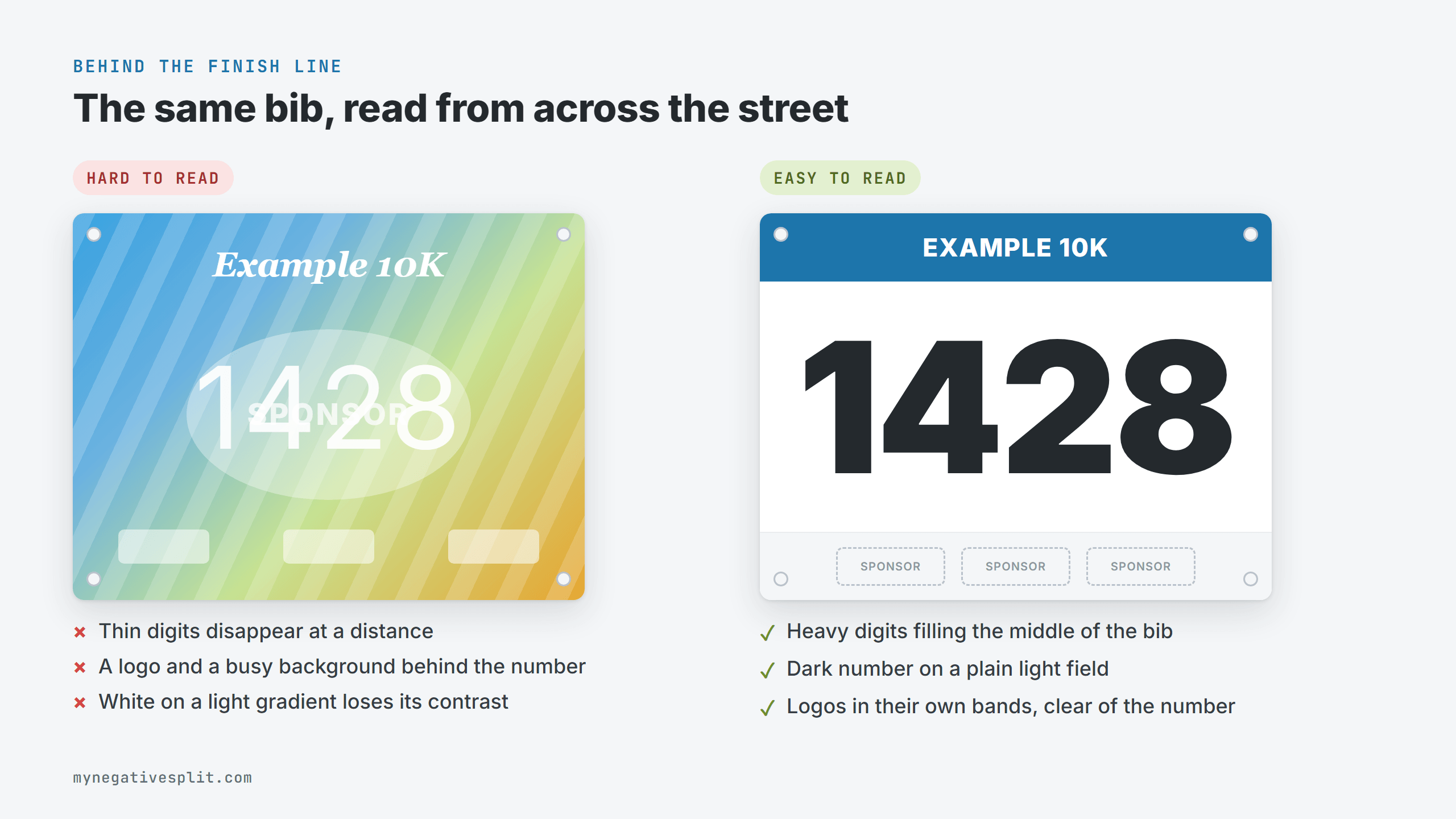
Almost none of those people are standing close to the bib, and every one of them needs the number before anything else. Give it most of the bib, set it in heavy digits, and print it dark on a plain light background.
Give everything else its own band
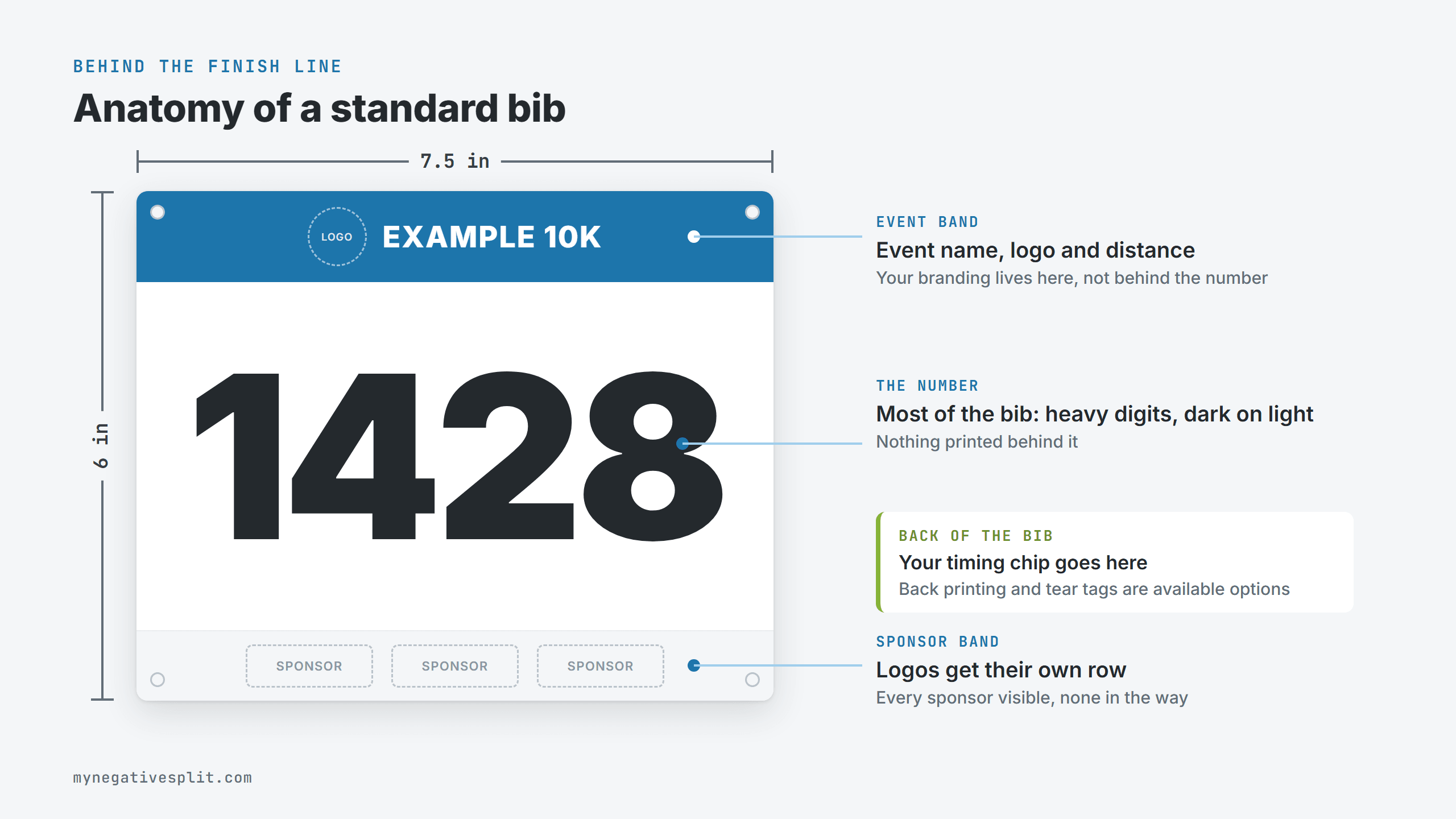
A standard bib is 7.5 by 6 inches, and that space goes quickly. Put the event name, logo and distance in a band across the top, sponsors in a row across the bottom, and keep the middle for the number.
One number range and one color per distance
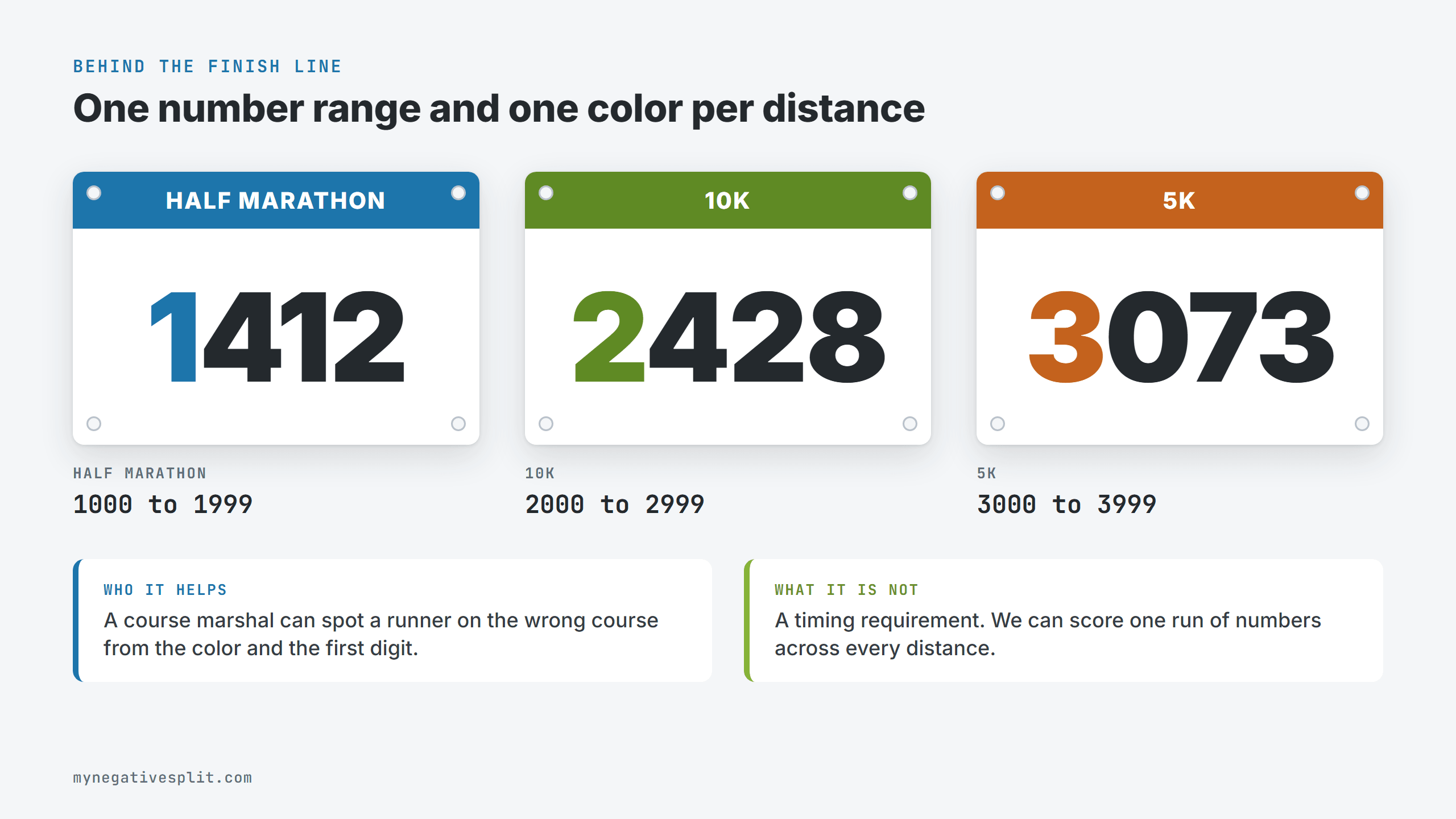
If your race has more than one distance, give each its own block of numbers: 1000 to 1999 for the half, 2000 to 2999 for the 10K, and so on. A different primary color for each distance makes them easier still to tell apart. A course marshal can then spot a 5K runner heading out on the half marathon loop at a glance.
Timing does not need it. We can score one continuous run of numbers across every distance, so the choice is yours.
Leave names off the bib
For most events we recommend against printing names. A named bib belongs to one person, so every runner in the pickup line needs their particular bib found for them. Without names you can use dynamic bib assignment: the volunteer hands over the next bib in the stack and records the number against the runner in the check-in app, which keeps the pickup line moving.
The back of the bib carries the chip
We install the timing chip on the back of the bib, so whatever is in front of the bib is in front of the chip. Tell runners to wear it on the front, flat and unfolded, outside their outer layer, and to pin it at the corners rather than through the chip.
Printing on the back and tear-off tags are both options we can add if your event has a use for them.
Lock the artwork by the order date
We order bibs by the Friday three weeks before your race, and quantity, number ranges and artwork all need to be final that day. We can order later than that, but a late order adds fees for rush production or expedited shipping. The full timeline is in what your timer needs from you, and when.